



From NTN, AI and energy to quantum communications, MNIS26 focused on the technologies and operating models redefining the telecom landscape.
Two days of operator insight, innovation debate and commercial reality-checks on the future of mobile networks.
MNIS26 brought together senior leaders from mobile operators, major vendors, innovators, founders and investors to explore the technologies, business models and partnerships shaping the next phase of network innovation. The result was a clearer, more grounded view of where the industry is heading - and what it will take to turn innovation into real commercial value.
The inaugural Mobile Network Innovation Summit was designed to examine a central industry challenge: how telecom turns emerging capability into deployable, investable and scalable innovation.
Across operator keynotes, deep-dive theme sessions and ecosystem discussions, the event showed that the real issue is no longer a shortage of ideas - it is the path from invention to adoption.
Senior voices from across the industry made the case that innovation remains essential — but must now be tied more tightly to business value, adoption and execution. The strongest operator message was clear: without focused innovation, operators risk drifting toward commoditization.
Pictured: Olaf Swantee, chairman of Odido and former CEO of EE and Sunrise, in conversation with Kieran Smith, Telecoms and Tech Correspondent, Financial Times.


MNIS26 focused on four major themes: non-terrestrial networks, energy, AI in the RAN, and quantum communications - each explored not just as technologies, but as drivers of broader strategic change.
One of the strongest threads running through the summit was that commercialisation itself now needs to be innovated. Across sessions, speakers returned to the same challenge: how to create clearer, faster routes from invention to scaled deployment.
Pictured: Sara Robles Moreno, CEO, Tomorrow Street


Operators, vendors, scale-ups, investors, analysts and public-sector stakeholders all contributed to the discussion, creating a more realistic picture of how innovation actually moves from research to deployment.

Non-terrestrial networks were discussed as a practical extension of the network, with growing relevance for resilience, rural reach, direct-to-device connectivity and industrial use cases.
Pictured: Jaymy Teh, VP, Go-To-Market Strategy & Telco Solutions, Proximus Global

Energy emerged as a strategic network design issue, spanning resilience, storage, decentralised generation, AI-driven efficiency and new infrastructure models.
Pictured: Innovator Insights panel

AI discussions moved beyond hype toward real operating models, with growing focus on optimisation, observability, automation, private networks and service control.
Pictured: Valeria Baiamonte, Director of Network Strategy & Transformation, VodafoneThree, in conversation with Robert Curran, Consulting Analyst, Appledore Research

Quantum was framed not as distant theory, but as an increasingly urgent strategic topic - especially in the context of quantum-safe security, trust and future network infrastructure.
Pictured: Frank de Jong, Program Director, Quantum Safe Networks, Orange Business
The summit showed that the most important innovations are not always the most visible. Better energy economics, stronger resilience, smarter software control and stronger security are becoming central to long-term competitive advantage.
The biggest challenge is not a lack of ideas. It is the difficulty of turning new capability into something that can be adopted, funded and scaled. That was one of the clearest lessons of the event.
For founders and investors, the summit suggested that telecom is becoming more accessible in specific parts of the stack — especially in software, orchestration, AI-enabled operations, NTN integration, energy optimization and security.
Scale, trust and lifecycle support still matter. But in a world shaped by AI-native operations, NTN convergence and
quantum-safe transition, vendors that help operators integrate new capabilities quickly and safely may gain more than those that simply defend installed base.
For founders and growth companies, the lesson from MNIS was not to sell innovation in the abstract. The strongest opportunities lie where technical novelty is directly connected to a clear operator pain point, a realistic insertion path and a visible business case.
Telecom innovation is no longer a single monolithic proposition. The most attractive opportunities are likely to sit in specific layers of the stack where operator need is rising and new entrants can participate more credibly: orchestration, AI-enabled operations, NTN integration, energy optimization, cyber response and quantum-safe transition.
By providing your details, you agree to receive marketing communications from MNIS. Please review our Privacy Policy for more details
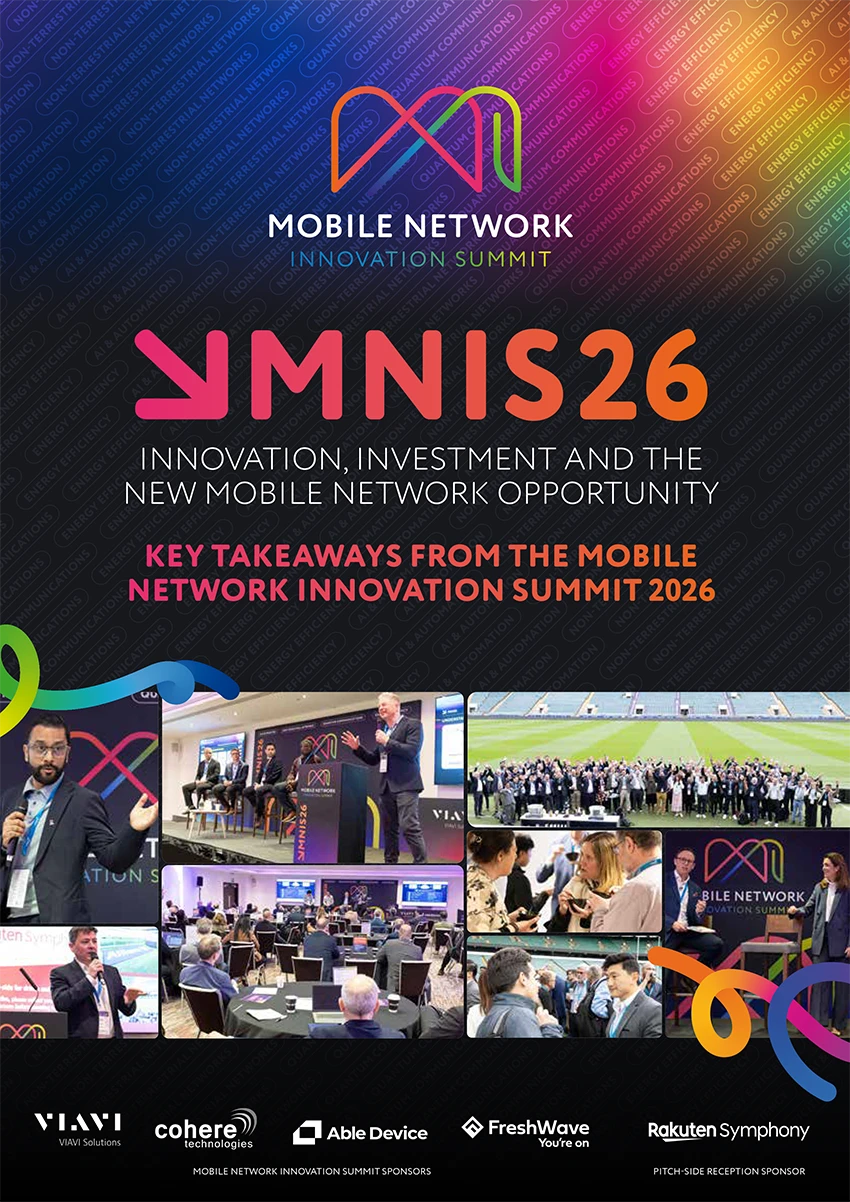
Explore the full MNIS26 post-event report for deeper analysis of the operator keynotes, the four innovation themes and the wider commercialisation and investment journey discussed across the summit.
By submitting this form, your details will be processed by MNIS in accordance with our Privacy Policy.